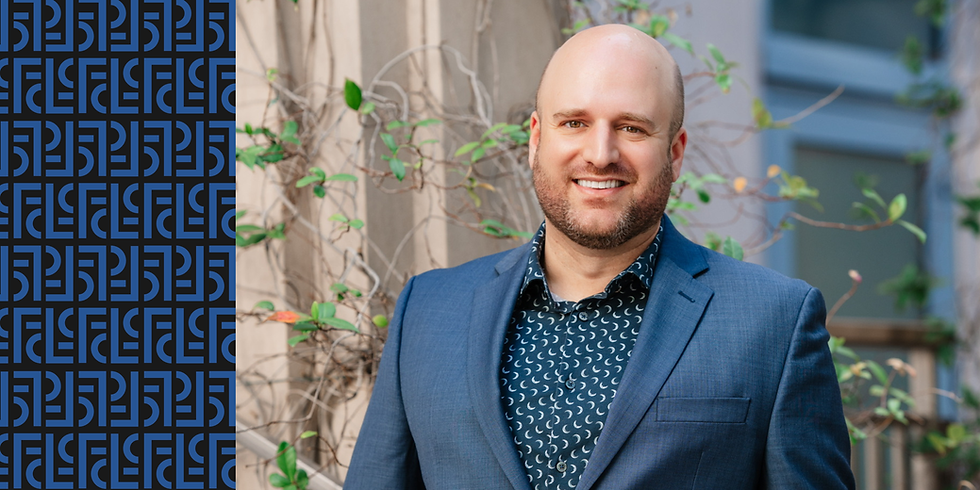
Introducing Joe Kennedy, Managing Director of Networked Learning at CFL

From Film Sets to Future-Ready Learning Solutions: Joe’s Journey to Reimagining Nevada Education
Key Insights (TLDR)
This story isn’t about a linear journey. It’s about how careers really work now, why networks and real-world learning matter, and what today’s rapidly changing workforce means for how we prepare students.
Networks matter as much as knowledge. A single educator’s connection helped me launch a film career - and that kind of real-world access shouldn’t be luck; it should be part of learning.
Career-changing is the norm, not the exception. Today’s learners aren’t preparing for one job - they’re preparing for a lifetime of pivots, reinvention, and learning.
Skills travel farther than job titles. Storytelling, creativity, and curiosity helped me move seamlessly from Hollywood sets to classrooms in Japan - and now into statewide learning work.
Learning is a lifelong, collective experience. The future belongs to a network of learners - students, educators, leaders - who are building relationships, sharing experiences, and shaping environments together.

I’m Going to Hollywood
When I was a student, becoming an educator was never something I would have expected for my career - instead, it was a happy accident along my journey.
Growing up in the early 90’s, I idolized Steven Spielberg, in fact one of the first “grown-up” books I ever tackled was a 500-page biography of Steven Spielberg that I carried around my middle school for weeks. My path was clear: I was going to work in Hollywood.
Fortunately, I had a lot of resources (and great educators) who helped me turn my dream into reality. From my hometown here in Las Vegas, where my first summer job was working in a movie theater, I went on to attend the University of Southern California, where I studied costume design, theatre and film.
Throughout my secondary education I was fortunate to work with practicing artists and real-world professionals who imbued my learning with practical experience that would never have been available in a textbook. They also helped connect me with spaces where I could network with professionals and share my own portfolio of work that I had developed through hands-on projects. It was through this support that I was able to meet the designer who would become one of my greatest mentors and get hired onto my first major feature film project (Think Like a Man 2 - filmed right here in Vegas!) before I had even walked across the graduation stage or received my diploma.
From the Film Studio to the Classroom
How then did I end up working in education? As a career-changer.
The first five years of my career were spent working across film studios on a variety of projects. I was incredibly fortunate to spend five seasons working on the Emmy-nominated costume design team for the Mindy Project and getting to meet more talented artists than I could have ever imagined (including my childhood idol Steven Spielberg!), but all the while I was working in an industry that was rapidly shifting due to technological disruption.
Television production in particular dropped by more than 50% as streaming services changed production models from 26-episode seasons to 6-10 episode miniseries. Content was increasingly sourced from overseas or filmed in communities with tax credits and Los Angeles now only accounts for less than 18% of scripted film production. Meanwhile, video-sharing platforms like YouTube and TikTok gave rise to a wave of content creators and shifted younger audiences away from traditional film studios and TV network channels. With all of these changes came massive shifts in what the day-to-day life of production team members and artists looked like - including my own.
Amid this backdrop I made the radical decision to try something new and move to Japan to teach English as an Assistant Language Teacher in a small public school outside of Osaka. I still remember getting a call just days before leaving asking me if I wanted to work as Rob Lowe’s set costumer for a TV show and when I told them I was leaving for Japan, they said “how exciting - what film are you working on?” - when I told them that I was going to teach middle school English, they truly couldn’t believe it.
Giving Back to Learners
Looking back, I was incredibly insecure about my choice to leave behind my “dream” career that I had fought so hard for - but every day I’m grateful to my past self who listened to an inner calling for something different. In working with students, I’ve found fulfillment in supporting their dreams for the future, just as so many great educators and mentors had done for me along the way.
The storytelling skills I had learned in the film world found great purpose in encouraging English Language Learners (both abroad and eventually back at home) to follow their dreams and grow their skills through exploration, curiosity and self-directed goals.
Where this Journey Shows Up in My Work
If you’re still reading this, you might be wondering why I’m giving you all of this background and how it matters to the work that I’m stepping into as I think about Networked Learning in our state. These are a few guideposts that I often reflect on as I pursue this current phase of my work and life:
I’m a career-changer and most of our students will be too: The latest surveys show that career change is accelerating among young professionals - 56% of current job seekers are looking to switch industries and 58% of young people have already switched careers at least once. We are not preparing learners for one career or profession, but for a lifetime of durable skills that will help them succeed in any environment they choose.
I got my start through real-world networking and every learner deserves that opportunity: I got my first job in the film business because one of my educators connected me with a colleague who was getting ready to film in Las Vegas and wanted an assistant that knew the area. Referrals from contacts account for about 30% of hires for young professionals (aged 18-24). If we are going to help prepare learners to be thriving adults we need to better connect our education pathways and experiences to the types of professional networks that learners care about.
I experienced a workforce driven by technological change and that’s becoming the norm: When I entered the film and television industry workforce it felt like we were on the forefront of technological disruption - from streaming to social media and smart phones - my Hollywood landscape was not Steven Spielberg’s. As we stand on the precipice of AI and automation, this level of technological disruption is being felt across industries. I’m motivated to think about how to help both students and educators not just navigate these changing tides but see how they can come out stronger on the other side.
I’m a lifelong learner and I want to grow a community of learners: I love learning. Maybe it was sparked by my childhood obsession with Jurassic Park that led me to study dinosaurs, maybe it was reinvigorated by my decision to move to Japan and learn to navigate the world through the lens of a completely different culture - but it was most definitely nurtured all along the way by the many encouraging educators who helped me to keep learning about the things that mattered most to me. I am truly passionate about building a community - a network - that powers learning. From state leaders to educators to youth, we each have so much to learn from one another and I’m excited to think about the experiences, environments and relationships that will power our collective future.
So, that’s a bit about me and a snapshot of my mindset as I begin my new journey with the Center for the Future of Learning. I’m excited to get to know you and learn more about your goals for the future of learning in our state - so please, if you’re reading this, reach out and connect with me. I’m looking forward to adding you to our network.


