Living at Your Own Pace: How Financial Literacy and Student Agency Are Transforming the Future of Learning in Nevada
- CFL

- Apr 15
- 3 min read

“I don't see any boundaries in the future of learning, or at least I like to hope that there aren't any boundaries. When I say that, I mean boundaries that can limit us.” – JimDre
Across Nevada, a new learning model has emerged, one where students take ownership of their learning experiences and connect it to the real-world.
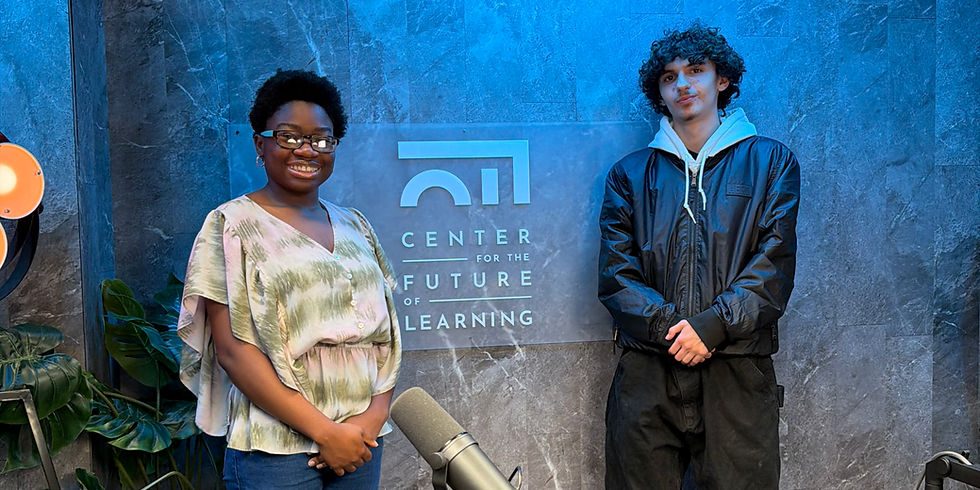
In the latest episode of The CFL Podcast, JimDre Westbrook, Education Liaison Manager at Silver State Schools Credit Union, joins CFL’s Chief Impact Officer, Jeanine Collins, to explore how financial literacy and student agency are reshaping the future of learning across Nevada.
The conversation is rooted in the idea of limitless learning and what is possible when we can build learner-centered environments that are outside of the box and don’t keep young people bound to one single framework.
Agency as the Foundation for Learning
“I've always been this builder. I've always wanted to do something that I could not just be proud of, but, there's a journey, there's a movement and live at your own pace.” - JimDre
At the core of the conversation is one big idea: learner agency changes everything.
Instead of fitting young people into a pre-built system, JimDre and Jeanine imagine something different, including environments where:
Students help design their own learning experiences
The “box” is built with them, not for them
Learning becomes something they actively shape
The result: students aren’t just preparing for their future, they’re actively creating it.
Think big picture: Vision boards, personalized goals and flexible pathways. Learning becomes more dynamic and less of a “one-size-fits-all” model.
What the Big Picture Really Looks Like
“There’s no roadmap when you're building something from nothing, right? And yet there are inputs. There’s people, resources, there’s something, but it’s not shaped yet.” - Jeanine
Instead of dreaming about the future, learners have the opportunity to live in it.
JimDre speaks to the variety of workshops he hosts annually, tailored to support young people interested in gaining financial literacy and real-world skills.
The goal of these sessions is to provide young people an opportunity to budget, align spending with personal values and prioritize their financial wellness, allowing them to step into the driver's seat and visualize what their future could look like.
An example of this is financial vision boards. These practical tools are designed to help learners visually connect to their aspirations (car, home, travel, etc.) and to build actionable steps to get there (saving, budgeting, planning).
This shift helps students:
Move from abstract goals to concrete plans
Build financial habits early
See a clear path forward
The other big picture experience is a simulation known as “Bit of Reality.” This experience invites young people to step into adulthood early. Each learner will be assigned a life scenario including a job, income, financial situation and credit score. From there, they must pay bills, make tough tradeoffs and navigate financial constraints.
Students walk away with:
Critical thinking skills
Real-world financial awareness
A deeper understanding of how systems work
They don’t just imagine the future through these simulations—they get to map it out, and it’s clear that these opportunities provide learners a space to learn real-world skills they’ve probably never had the chance to exercise before.
Scaling the Future of Learning in Nevada
“One of the things that resonates with me about the Portrait of a Nevada Learner is the agency. Learning that the students' choices connect to outcomes and that they have a little bit of control over it. That’s a really cool part.” - JimDre
The conversation also surfaces an important question: How do we scale this kind of work so every student has access to it?
The answer: There’s real momentum—but scaling this kind of learner-centered, real-world work takes intention.
What Needs to Happen Next:
Leadership must be present at every lLevel - Not just passionate educators, but principals, district leaders and system-wide champions aligned around the vision
Unlocking what already exists - Powerful tools, like financial literacy simulators and vision boards, are already available across the district, but awareness and access are still limited
Designing for access, not luck - Ensuring every student experiences financial literacy and real-world skill building opportunities, no matter their school
These ideas help to elevate CCSD into a true “Destination District,” and a place where innovative, learner-centered experiences are an expectation and learning is connected to life beyond the traditional classroom.
The Bottom Line: A New Vision for Learning
By the end of the episode, it’s clear: this is more than a story about financial literacy lessons. It’s a case study in what’s possible when we center learners, respect their agency and invite them to live and learn at their own pace.
If you are interested in learning more about CFL’s partnerships or mission, visit nvcfl.org.