Preparing Educators for the Future of Learning: 5 Lessons from Dr. Bernnell Peltier-Glaze

Episode 3 of the CFL Podcast

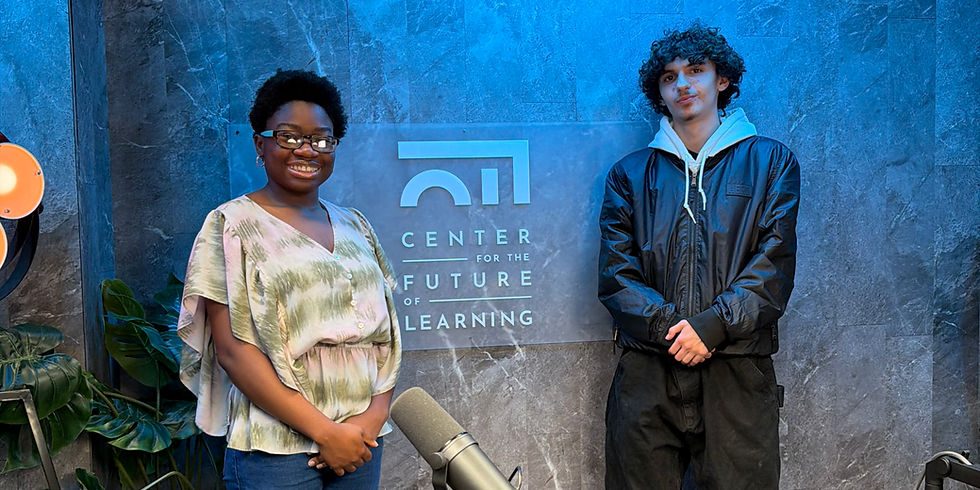
In the third episode of The CFL Podcast, Jeanine Collins, Co-Founder and Chief Impact Officer of The Center for the Future of Learning (CFL), sits down with Dr. Bernnell Peltier-Glaze, Dean of the School of Education at Nevada State University, for an insightful discussion on teacher preparedness, innovation in education and the future of learning across Nevada.
Together, they explore what it means to prepare educators for today’s learning environment, including how classrooms are shifting to accommodate the learner needs, the multiple pathways to success and the growing demand for empathy, flexibility and real-world relevance in Nevada education.
The Future of Learning Begins with Belief and Purpose
“Teaching and learning is too important to me to take a detour.” - Dr. Bernnell Peltier-Glaze
The role of an educator is not static—it’s a lifelong calling that shapes learners, families and entire communities. At its core, effective teaching begins with understanding the current environment and remaining open to innovation.
For Dr. Peltier-Glaze, this openness didn’t come from policy alone. It grew out of lived experience, deep reflection and a belief in the transformative power of education.
Her journey into education began early. As a catechism teacher and a member of her speech and debate team, she was already stepping into leadership and instructional roles. Teaching quickly became more than what she did, it was who she was. By the age of 16, she had officially begun her career as an educator, experiencing the “lightbulb moments” that would shape her path forward.
From classroom teacher to principal and beyond, Dr. Peltier-Glaze’s career spanned multiple states including New York and Nevada, and countless roles, each reinforcing the idea that teaching is about purpose, not position.
Teaching is More Than a Profession–It’s a Human Connection
“The superpower of an educator is going to be their ability to be a human.” – Jeanine Collins
At its best, education can change lives. It has the power to alter trajectories not just for learners, but for their families and communities as well.
At CFL, the work is grounded in the belief that the future of learning is rooted in connection, purpose and preparation, preparing learners for a lifetime of learning long after their time in the classroom is over. Conversations about the future of learning at CFL are rooted in preparing learners not just for graduation, but for a lifetime of learning beyond the classroom.
Yet alongside this vision is an honest reckoning: the systems and structures surrounding education can unintentionally limit innovation. Policies, traditions and operational demands can squeeze out the very creativity educators enter the profession to bring. That’s why building a strong education ecosystem—one that supports educators, learners, and communities together—is critical to sustainable change.
Preparing Teachers for the Realities of Classrooms
A central focus of Dr. Peltier-Glaze’s work is teacher preparedness. She reflects on teacher prep programs and how they need to be honest about how future teachers are getting ready for their role and identify where gaps still exist.
Too often, conversations about innovation, curriculum reform, and the future of education remain theoretical. Dr. Peltier-Glaze points out that while educators frequently dream and talk about what’s possible, systems often default back to tradition.
The real challenge—and opportunity—is bridging the gap between new ideas and real-world solutions.
The work cannot happen in isolation. True innovation requires collaboration and partnership across systems. Higher education and K–12 schools must learn from one another, engaging in a reciprocal relationship that meets students where they are and prepares them for their futures, long after their time in the classroom is over.
Co-Designing the Future With Learners
“It’s important that our students, especially these days, know that somebody believes in them.” – Dr. Bernnell Peltier-Glaze
The Portrait of a Nevada Learner reframes how we think about agency, including who has it, how it’s shared and how learners of all ages can come together to co-design their educational experiences.
This work isn’t without challenges. Policy shifts, funding changes and initiatives that don’t always unfold as planned can create barriers, but as Jeanine notes, the absence of resources doesn’t necessarily equate to the absence of possibility.
Choosing optimism over limitation is exactly what we want learners to do: adapt, problem-solve, and persist. When educators truly know their students—understanding their skills, interests, and aspirations—learning transcends the classroom. Learners then begin to see meaningful connections and recognize the possibilities available to them.
An Infinite Journey Forward
“At CFL, we’re always going to be in this cycle of listening, connecting, building, amplifying what’s working and continuing to keep doing that.” – Jeanine Collins
Across Nevada, educators and partners are leveraging technology, community partnerships and innovative solutions to align learning with workforce readiness and real-world needs. When used thoughtfully, technology positions learners as capable contributors to their communities.
One of the strongest themes throughout the conversation is the idea that education has no finish line. The work is infinite. Progress comes through a continuous cycle of listening, reflecting, building and amplifying what works.
By partnering in both thought and action, educators, learners and communities can continue shaping what’s possible for Nevada and for the future of learning beyond the state.
Go Deeper: A Conversation on Listening, Pathways, and Rethinking Success
The future of learning is not built in isolation. It’s shaped through empathy, reflection and action.
In this episode of The CFL Podcast, Dr. Peltier-Glaze and Jeanine Collins challenge us to rethink educator preparation and redefine learner success. Listen to the full episode here:https://open.spotify.com/episode/0chdwRqRrvy4zyMJh9nlL5
Below is a featured transcript clip from the conversation (07:59–13:57), highlighting the power of listening, relationships, and evolving our definition of success in education.
Dr. Peltier-Glaze: I used to be one of those people who said, higher ed, higher ed, higher ed. That was my message—you’ve got to go to college. That’s what I preached.
Dr. Peltier-Glaze: But if we’re not evolving as individuals, we end up sitting still and watching the world change around us. I’m someone who likes to evolve. As I did, I spent more time observing and interacting with people—young children, older individuals, students of all ages.
Dr. Peltier-Glaze: What I began to see was this: there are multiple pathways. And we have to be intentional about preparing learners for different pathways.
Dr. Peltier-Glaze: Through those interactions, I had to take a step back and really listen. I had to hear and observe what people actually needed. I realized I was forcing what I thought was best, without understanding that the best path looks different for each individual.
Dr. Peltier-Glaze: Even when someone’s path does include college or higher education, what does that actually look like for them? It shouldn’t be one-size-fits-all. That traditional model—where every classroom looks the same, teaches the same way, and measures success the same way—is still something we rely on far too much.
Dr. Peltier-Glaze: We can’t continue to have classrooms that look like the ones I sat in as a student or even the ones I taught in. I came to that realization through teaching, interacting, and—most importantly—building relationships.
Dr. Peltier-Glaze: You mentioned this earlier: relationships. When we talk about classroom management, it always comes back to relationships. And through those relationships, I started hearing students say things like, “I don’t know,” or “I’m not sure if college is for me.”
Dr. Peltier-Glaze: Years ago, I would’ve responded, “What do you mean college isn’t for you? Of course it is—that’s the only way to succeed.” And I still believe college is one powerful way to succeed.
Dr. Peltier-Glaze: But if we’re not meeting students where they are—if we’re not tapping into their skills, their passions, and what they care about—then we’re missing a huge opportunity. Not just for them, but to truly strengthen and uplift our communities.
Jeanine Collins: I love how you’re describing listening and empathy as the things that helped you uncover an unmet need in your students.
Jeanine Collins: What they weren’t asking for was simply help advancing through the system they were already in. What was underneath their questions was something deeper: Who am I?What do I care about? Where do I belong? How will I contribute?
Jeanine Collins: They might not have been asking those questions directly, but that’s what was sitting beneath the surface.
Jeanine Collins: To me, that’s a really beautiful way to describe innovative learning. It starts with listening. It starts with meeting people where they are—and doing so from an assets-based mindset, not a deficit-based one.
Jeanine Collins: Not, "You’re not on your way to college, therefore something is wrong with you.” But instead, “Who are you? What are you curious about? What excites you? And how do I help nurture that so you can move forward on your own path?”
Jeanine Collins: I think a lot of people might agree with us on that idea—maybe not everyone, and that’s okay. That’s why we have these conversations.
Jeanine Collins: But the next layer is where it gets challenging: How do you actually operationalize this belief? How do you build systems that allow people to move in multiple directions?
Jeanine Collins: That’s where it can feel scary—especially in systems that are rigid, with very narrow definitions of success. And we haven’t even touched policy yet. There are so many threads to pull.
Jeanine Collins: But at the heart of it is this mindset shift: Maybe this young person—who doesn’t have everything figured out yet—is perfectly okay. Perfectly capable. Perfectly awesome.
Jeanine Collins: Our job isn’t to force them to prove a predetermined set of outcomes. It’s to help them discover who they are and what they want to pursue.
Jeanine Collins: And just to be clear, this isn’t about saying students don’t need math or reading or foundational skills. That’s not the conversation at all. The issue is how narrow our definition of success has become.
Jeanine Collins: So the real question is: how do we open it up? I really appreciate how empathy and listening were at the center of what shifted your thinking and expanded your vision for what learning can be.